
Security Systems in Canterbury
Home Security Systems Canterbury
A good home security system in Canterbury usually combines a graded intruder alarm, well-placed CCTV and secure entry points, sized to the individual property rather than sold as a one-size kit. For most homes that means a monitored or app-connected alarm covering the doors, ground-floor windows and main circulation areas, with cameras added where they earn their place. What a Canterbury home actually needs depends on the type of property, where it sits and what you are protecting, and the honest guide is that a smaller, well-designed system beats a large one fitted badly.
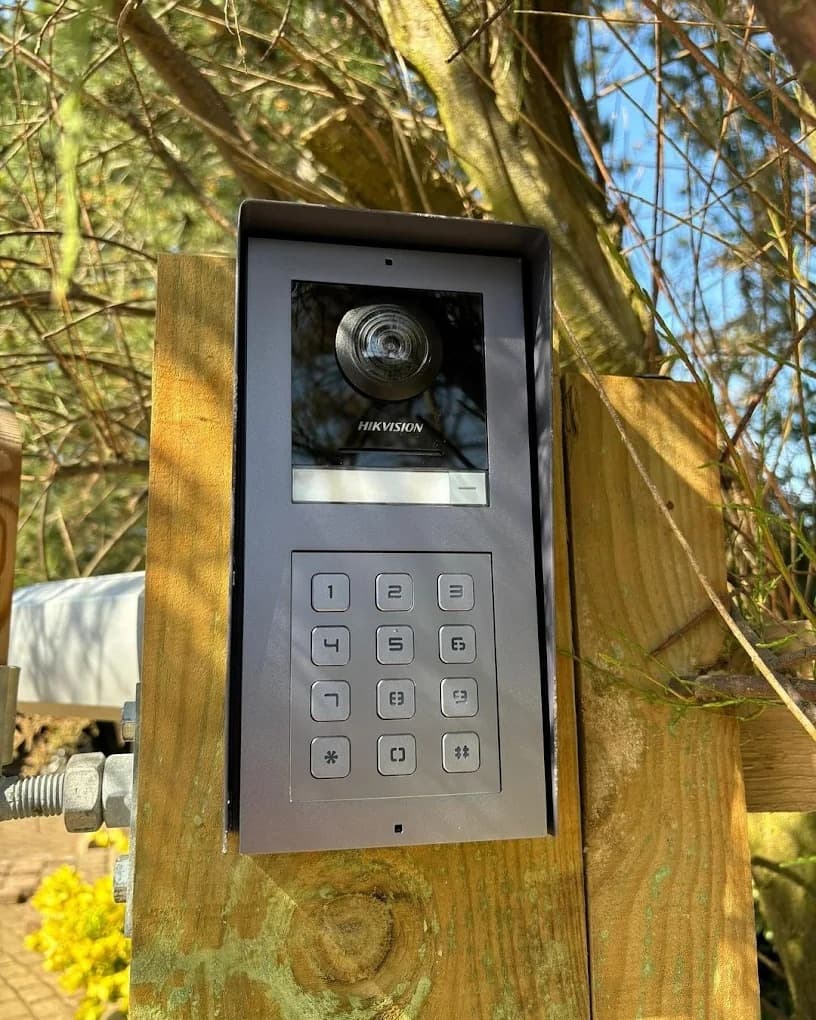
A good home security system in Canterbury usually combines a graded intruder alarm, well-placed CCTV and secure entry points, sized to the individual property rather than sold as a one-size kit. For most homes that means a monitored or app-connected alarm covering the doors, ground-floor windows and main circulation areas, with cameras added where they earn their place. What a Canterbury home actually needs depends on the type of property, where it sits and what you are protecting, and the honest guide is that a smaller, well-designed system beats a large one fitted badly.
The reason there is no single answer is that Canterbury covers everything from Victorian terraces near the city walls to detached homes in the surrounding villages and rural plots with no street lighting at all. At Bespoke AVS we fit and maintain home security systems across Canterbury and the wider Kent area, and we plan each one around the building and the household rather than pushing a fixed package. This guide covers what a good system includes, how much protection a home really needs, why Canterbury properties often need a tailored approach, the choice between wireless and wired kit, the insurance and legal side, and how to choose an installer you can trust.
What a home security system in Canterbury includes
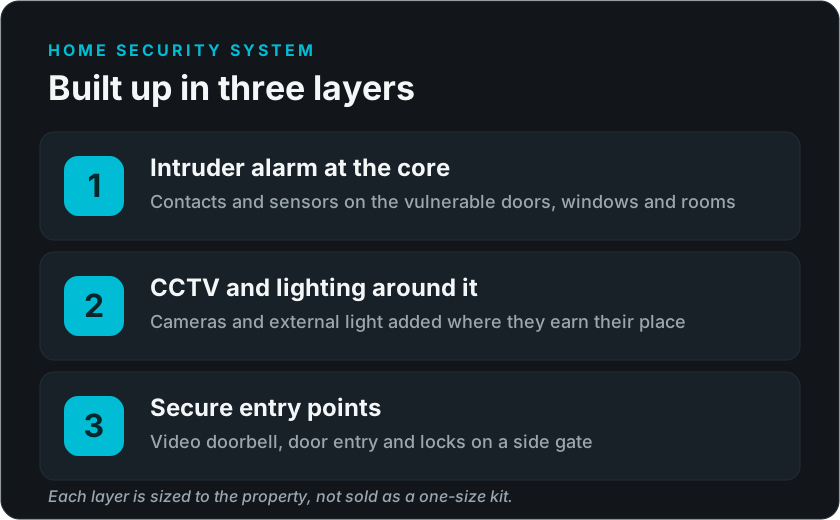
A complete home security system is really several layers working together. The core is the intruder alarm, with contacts on the vulnerable doors and windows and motion sensors covering the rooms a burglar would have to cross. Around that sit the parts that deter and record, which is where CCTV and good external lighting come in. Many homes then add secure entry, whether that is a video doorbell, a door entry system or electronic locks on a side gate.
The point of layering is that each part does a different job. A camera records and deters, but it does not stop anyone. An alarm raises the alarm and brings a response. Sensors and contacts tell you where the problem is. We fit these as security systems that talk to each other, so a triggered sensor can flag the relevant camera rather than leaving you scrolling through hours of footage.
How much protection your home actually needs
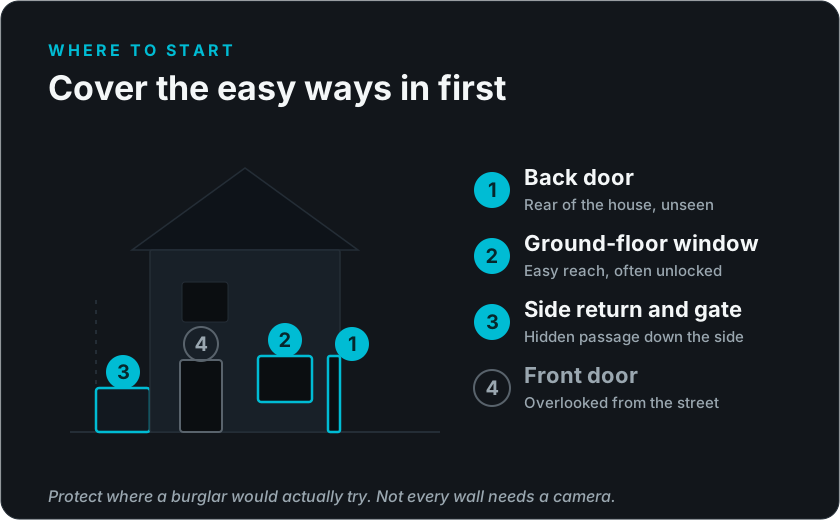
Most homes do not need every room covered. Burglars come in through the easy points, the back door, a ground-floor window, a side return that is not overlooked, so that is where the money is best spent. We usually start with the ground floor and any flat-roof or extension window that gives a leg up to the first floor. From working with clients across Canterbury and Kent, we have found that the two changes that make the biggest difference are protecting the rear of the property properly and covering the one entrance the household actually uses, because that is where habits get lazy.
There is a temptation to fit a camera on every corner. In most cases that is money that would do more good spent on a monitored alarm and good lighting. We are happy to talk that through honestly rather than push you towards the more expensive option, and we will tell you what a property needs and nothing it does not. If you are weighing up the spend, our guide to what a home security system costs sets out the typical figures without the sales gloss.
Why Canterbury properties need a tailored approach
Canterbury has an unusually mixed housing stock, and it shapes what you can fit. The streets inside and around the city walls hold a lot of older, solid-wall and period homes, some of them listed or inside a conservation area, where you cannot simply drill through a flint wall or run trunking across a front elevation. Out in the villages and on the rural edges, properties sit on larger plots with long dark boundaries and no street lighting to help a camera at night.
In our experience, a wireless alarm system works better than a hardwired one in Canterbury's older solid-wall and listed properties because running cable through flint, lath and plaster means lifting floors and chasing walls you are often not allowed to touch. On the rural edges the opposite pressure applies, where the challenge is lighting and camera choice rather than cabling. We have found that infrared cameras earn their keep on dark boundaries where a standard camera would give you a grey smear after dusk, so good CCTV installation in Canterbury is as much about lighting and lens choice as the cameras themselves. If a property is listed or in the conservation area, we keep external kit discreet and site it where it does not need consent you have not got.
Wireless or wired, and monitored or not
The two decisions that shape a home system are how it is wired and how it responds. Wireless systems have come a long way and suit most homes, particularly older ones, because they go in with far less disruption. Wired systems still make sense in a new build or a renovation where the walls are already open. Neither is better in the abstract. It depends on the property.
Monitoring is the other choice. A bells-only system makes noise and relies on a neighbour to act. A monitored system sends the alarm to a monitoring centre or straight to your phone, so something happens even when the street is empty. In our experience, a monitored or app-connected alarm works better than a bells-only siren for a home that sits empty in the day because a siren nobody hears and nobody reports does very little to stop a determined intruder. Whether full monitoring is worth the annual cost depends on the household, and we will give you a straight answer for your situation rather than a default upsell.
The insurance and legal side
Two practical things are worth knowing before you fit a system. The first is insurance. Some insurers ask for an alarm to a particular standard as a condition of cover, and a professionally installed and maintained system is usually looked on more favourably than a DIY one. Check your own policy wording, because requirements vary and fitting the wrong grade can leave you no better off.
The second is cameras. If your CCTV only captures your own property you have little to worry about, but as soon as it takes in a neighbour's garden, a shared drive or the pavement, data protection rules apply. The Information Commissioner's Office sets out what domestic users need to do, and it is straightforward to stay on the right side of it with sensible camera placement. For home security more broadly, the police-backed Secured by Design scheme is a good reference for the standards that genuinely reduce break-ins.
Choosing an installer in Canterbury
Anyone can fit a box on a wall. The difference is in the survey, the siting and what happens when something goes wrong two years later. We are Kent County Council Trading Standards Checked, which means our work and the way we deal with customers have been checked by a scheme that does not hand its approval out lightly. We also carry out insurance work and offer a call-out service, so a fault does not leave you exposed for weeks.
When you are comparing installers, look for a proper survey rather than a price over the phone, ask who answers when the system faults, and read what previous customers say. You can see our reviews and find us on Facebook and Yell, and you can read more about the team on our about us page. A good installer should be willing to tell you when you do not need something, which is the opposite of how a lot of security is sold.
Bringing it together
A good home security system in Canterbury is a set of layers, an alarm at its core, cameras and lighting where they help, and secure entry points, all sized to the property rather than bought as a kit. The right shape depends on whether you are in a period home near the walls, a family house in the suburbs or a rural property on a dark plot, which is why the survey matters more than the brochure. Done properly, a modest, well-planned system will protect a home better than an expensive one fitted without thought.
If you are thinking about a system for your home, we are happy to take a look and give you honest advice on what it needs. You can get in touch with Bespoke AVS to arrange a survey across Canterbury and the wider Kent area.
Keep reading
Related guides
Security Systems
How Much Does a Home Security System Cost in the UK?
Home Security System Cost in the UK varies depending on the type of system, the size of the property, and how it is installed. Many homeowners expect a fixed price, however the reality is that costs differ because no two properties have the same layout or level of risk.
Read guideSecurity Systems
Do Security Systems Work?
Do Security Systems Work? It is a fair question. Before investing in alarms, cameras, or access control, homeowners and business owners want clear reassurance that a security system will genuinely protect their property. The simple answer is yes. When designed properly and installed correctly, security systems are highly effective at deterring crime, reducing risk, and providing reliable evidence.
Read guideSecurity Systems
Security Systems Kent
Security Systems Kent services are essential for homeowners and businesses who want dependable protection across the county. Kent includes busy towns, rural villages, industrial estates, retail parks, and coastal communities. Each location presents different risks and property layouts. A professionally designed security system provides deterrence, monitoring, and control in one integrated solution.
Read guideFree estimates
Want a free estimate in Canterbury?
No up-selling, just simple honest advice. Domestic and commercial work across Aylesford, Maidstone, Medway, Sittingbourne, Gravesend, Canterbury, Tunbridge Wells, Sevenoaks, Dartford, Bromley.