
What Is a Grade 2 Alarm System?
By Benjamin Williams
A Grade 2 alarm system is an intruder alarm built to the second of four recognised security grades, and it is the level that suits most ordinary homes. The grade describes how much resistance the system is designed to have against a burglar, and Grade 2 is set for properties at low to medium risk, which covers the majority of houses and flats. In plain terms, if you are a normal household wanting a proper alarm, Grade 2 is almost certainly the one you are looking at.
The reason grades matter is that they are what an insurer checks and what matches the system to the actual risk, so getting the grade right saves you from both under-protecting and over-paying. At Bespoke AVS we install graded alarm systems across Kent, the South East and London, and we specify the grade to the property rather than selling the highest number. This guide explains what the grades mean, what a Grade 2 system includes, when you might need a higher grade, and how to be sure you are getting one.
What the alarm grades mean
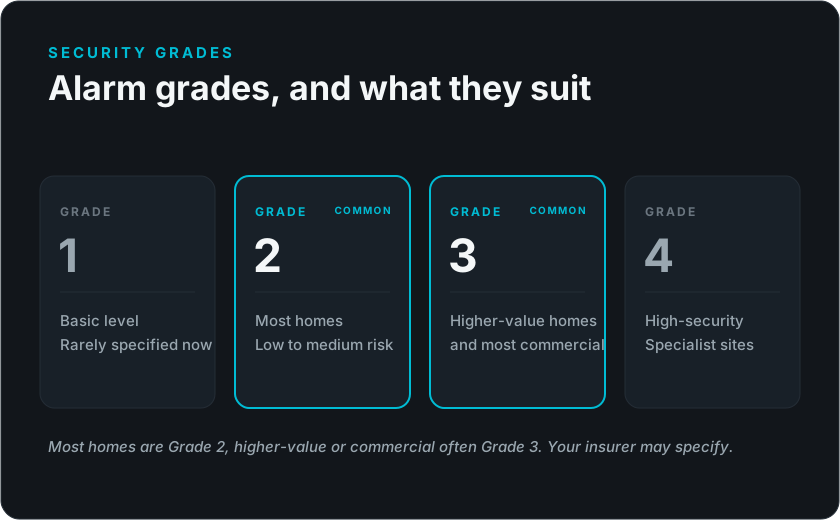
Intruder alarms are built to four security grades set by recognised standards, and each is intended for a different level of risk. Grade 1 is a basic level, rarely specified now. Grade 2 is for low to medium risk, which is where most homes sit. Grade 3 is for higher-value homes and most commercial premises, where the risk and the reward for a burglar are greater. Grade 4 is for high-security specialist sites. Knowing where Grade 2 sits is the first thing to weigh up when you think about what to look for in an alarm system.
What a Grade 2 system includes
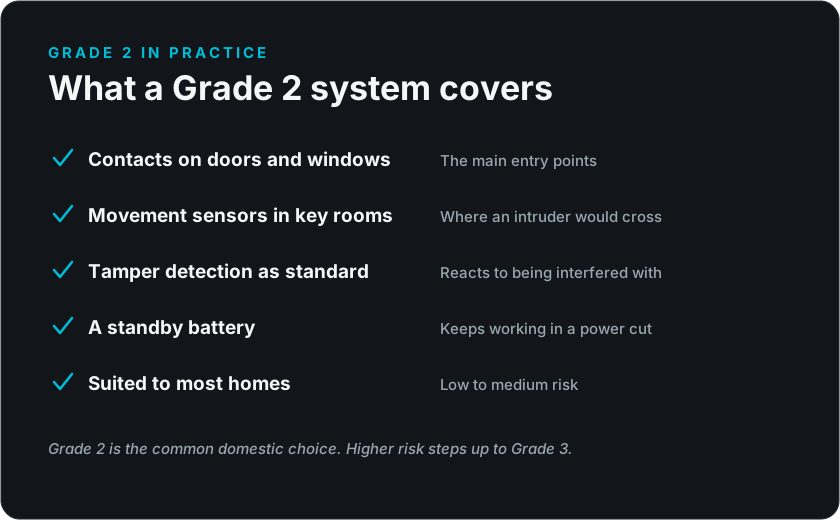
A Grade 2 system is a proper, complete alarm rather than a cut-down one. It puts contacts on the vulnerable doors and windows, movement sensors in the rooms an intruder would have to cross, tamper detection so the system reacts if someone opens or moves the kit, and a standby battery so it keeps working through a power cut. That specification is what makes it suitable for the low to medium risk of a normal home, and it is why Grade 2 is the standard recommendation for most houses.
When you might need Grade 3 instead
Not every property is a Grade 2. Higher-value homes, and most commercial premises, step up to Grade 3, which is built to resist a more determined and better-equipped intruder. The usual trigger is your insurer, who may specify a grade as a condition of cover, so it is always worth checking the policy before you decide. In our experience, a Grade 2 system matched to a normal home works better than jumping to a Grade 3 you do not need, because the grade is what your insurer actually asks for and paying for a higher one adds cost without adding cover your policy wants. If you are budgeting, it helps to know what an intruder alarm costs at each level.
How to be sure you are getting Grade 2
The simple answer is to ask, and to use an installer who can tell you which grade they are fitting and why it suits your property. A genuine Grade 2 system is specified and installed to the recognised standards, which you can read about via British Standards, rather than a box that merely claims a number. We are Kent County Council Trading Standards Checked, and we fit alarm systems to the grade a property actually needs. You can read more about the team on our about us page or find us on Facebook.
Bringing it together
A Grade 2 alarm system is the standard, properly specified alarm for a normal home, built to the second of four security grades for low to medium risk. It covers the doors, windows and key rooms with tamper detection and a standby battery, and for most households it is exactly the right level. Step up to Grade 3 only when the property or your insurer calls for it, and you end up with cover that fits rather than a bigger number than you need.
If you are not sure what grade your property needs, we are glad to survey it and tell you honestly. You can get in touch with Bespoke AVS for advice or a free estimate across Kent, the South East and London.
Keep reading
Related guides
Security Systems
Are Smart Alarm Systems Worth It?
Smart Alarm Systems are becoming increasingly common across homes and businesses in the UK. With mobile apps, instant alerts, and remote control features, they offer far more flexibility than traditional alarm systems. However, many people still ask whether they are genuinely worth the investment or just another upgrade that adds cost without real benefit.
Read guideSecurity Systems
What Types of Alarm Systems Are Available?
Types of Alarm Systems vary depending on the level of protection required, the type of property, and how the system is intended to be used. Many homeowners and businesses assume all alarm systems work in the same way, but in reality, there are several different options, each suited to specific situations.
Read guideSecurity Systems
What Is a Monitored Alarm System?
A monitored alarm system is one that does not just make a noise when it goes off, but sends the alarm to a manned monitoring centre that can act on it, calling a keyholder or requesting a police response. Where a standard alarm relies on a neighbour to notice the siren, a monitored one means someone is always watching for the signal, day or night, whether you are home or on the other side of the world. It is the difference between an alarm that shouts and an alarm that actually brings a response.
Read guideFree estimates
Tell us about the job and we'll sort the rest
No up-selling, just simple honest advice. Domestic and commercial work across Aylesford, Maidstone, Medway, Sittingbourne, Gravesend, Canterbury, Tunbridge Wells, Sevenoaks, Dartford, Bromley.