
What Should You Look for in an Alarm System?
By Benjamin Williams
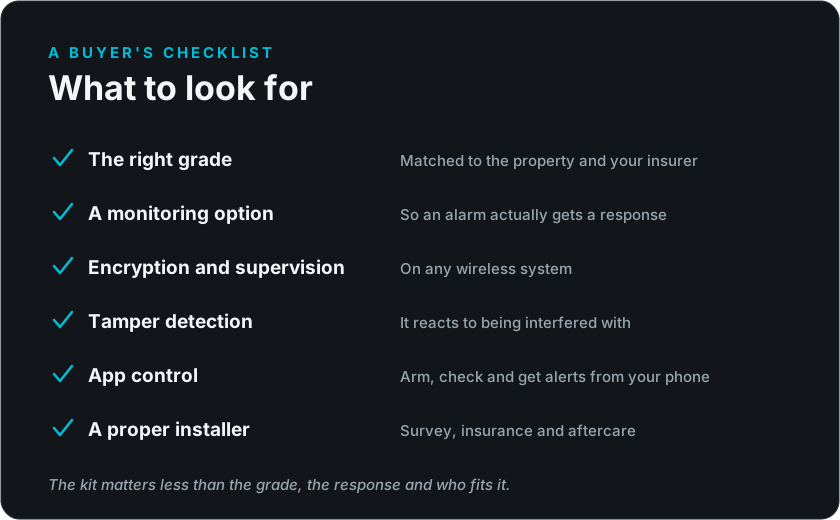
The main things to look for in an alarm system are the right security grade for your property, the option to have it monitored, proper encryption and supervision if it is wireless, tamper detection, app control, and an installer who surveys the property and stands behind the work. Get those right and the brand on the box barely matters. So the short answer is that the important choices are about grade, response and who fits it, far more than the badge or the number of sensors in the kit.
The reason it pays to know what to look for is that alarms are often sold on price and sensor count, which are the two things that matter least. At Bespoke AVS we fit and service alarm systems across Kent, the South East and London, and we spend a lot of time explaining what actually makes a difference before someone spends their money. This guide walks through each thing worth checking, and the warning signs that tell you to look elsewhere.
The right grade for the property
Alarms are built to recognised security grades, and the grade is the single most useful thing to get right, because it is what an insurer checks and what matches the system to the risk. Most homes are a Grade 2, while higher-value homes and commercial premises step up to a Grade 3. You can read the standards side on British Standards, but the practical thing to do is simply ask what grade is being fitted and why it suits your property. An installer who cannot answer that is not the one to use.
Whether it can be monitored
The next question is what happens when the alarm goes off. A bells-only system sounds a siren and hopes a neighbour acts. A monitored system sends the signal to a manned centre that can call a keyholder or request police, and a self-monitored one alerts your phone. You do not have to take monitoring, but you should look for a system that can be monitored later without being ripped out, so the option stays open as your needs change.
Encryption and supervision on wireless
If the system is wireless, and most now are, two features separate a serious one from a cheap kit. Encryption, usually rolling-code, stops a signal being captured and replayed. Supervision means the panel expects a regular check-in from every sensor and treats silence as a fault rather than a blind spot. Both should be standard, not upgrades, and if you are weighing up a connected system it is worth understanding wireless intruder alarms in a bit more depth.
Tamper detection and app control
Tamper detection means the system reacts if someone opens or moves a sensor, panel or sounder, which closes an obvious gap. App control is the modern convenience worth having, letting you arm and disarm, check the status and get alerts wherever you are. Neither is exotic any more, so look for both as part of the system rather than paid extras. And if you share the house with a cat or dog, look for pet-friendly sensors so the alarm ignores the pet but still catches a person.
The installer, not just the kit
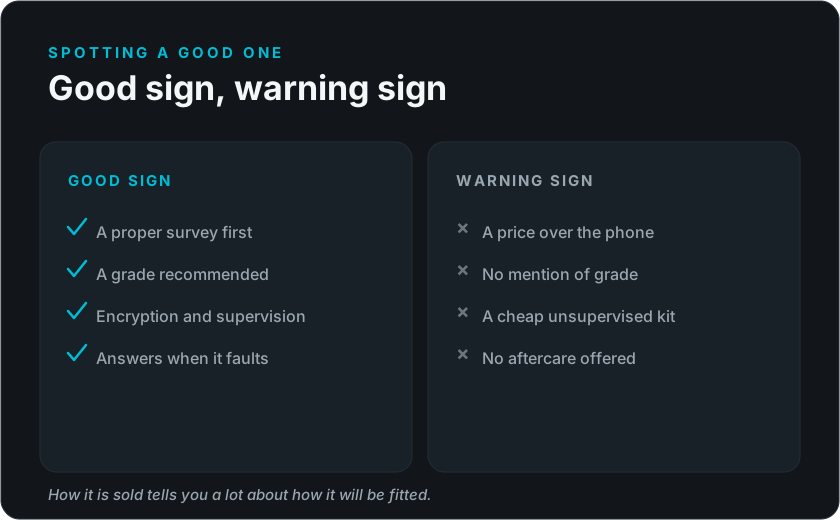
This is the part most people underweight. In our experience, choosing on the installer works better than choosing on the kit because the same alarm fitted well and serviced for years beats a better alarm fitted badly and forgotten. Look for a proper survey rather than a price over the phone, insurance work undertaken, and someone who answers when the system faults. We are Kent County Council Trading Standards Checked, and we fit alarm systems to a survey rather than a fixed package. For the wider picture of what actually deters a break-in, the police-backed Secured by Design scheme is a good reference.
You can read more about the team on our about us page or find us on Facebook.
Bringing it together
What to look for in an alarm system comes down to a handful of things that rarely appear in the sales pitch, the right grade, the option to monitor it, encryption and supervision on wireless, tamper detection and app control, and above all an installer who surveys the property and stands behind the work. If you would like to see how those come together, the best alarm system for a home is a good next read. Get the checklist right and you end up with a system that protects the property for years rather than one that looked cheap on the day.
If you are choosing an alarm and would like an honest view on what your property needs, we are glad to help. You can get in touch with Bespoke AVS for advice or a free estimate across Kent, the South East and London.
Keep reading
Related guides
Security Systems
What Is a Monitored Alarm System?
A monitored alarm system is one that does not just make a noise when it goes off, but sends the alarm to a manned monitoring centre that can act on it, calling a keyholder or requesting a police response. Where a standard alarm relies on a neighbour to notice the siren, a monitored one means someone is always watching for the signal, day or night, whether you are home or on the other side of the world. It is the difference between an alarm that shouts and an alarm that actually brings a response.
Read guideSecurity Systems
Are Pet-Friendly Alarm Systems Effective?
Yes, pet-friendly alarm systems are effective, and for most households with a cat or a dog they are the sensible way to have an alarm you actually use. They rely on pet-tolerant motion sensors that ignore movement low down, where a pet lives, while still detecting a person moving through a room. The result is an alarm you can set with the pets at home without it going off every time the dog crosses the hall. They are not magic, though, and how well they work depends on the pet, the sensor and where it is placed.
Read guideSecurity Systems
What Is the Difference Between Wired and Wireless Alarm Systems?
The difference between wired and wireless alarm systems is simply how the sensors talk to the control panel. In a wired system they are connected by cables run through the walls, and in a wireless system they send encrypted radio signals instead. That one difference drives everything else, wireless goes in quickly with little mess and runs its sensors on batteries, while wired means more installation work but nothing to replace in the sensors. For most existing homes wireless is now the sensible default, and wired earns its place mainly when the walls are already open.
Read guideFree estimates
Tell us about the job and we'll sort the rest
No up-selling, just simple honest advice. Domestic and commercial work across Aylesford, Maidstone, Medway, Sittingbourne, Gravesend, Canterbury, Tunbridge Wells, Sevenoaks, Dartford, Bromley.