
What Is the Difference Between Wired and Wireless Alarm Systems?
By Benjamin Williams
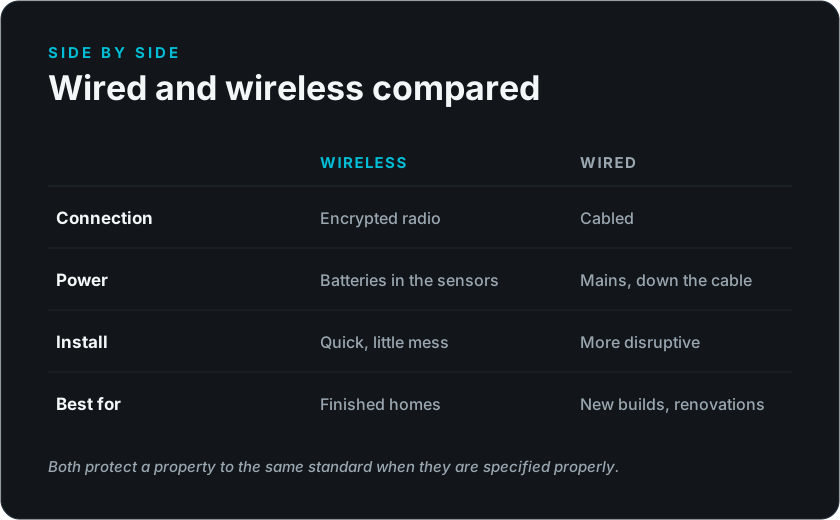
The difference between wired and wireless alarm systems is simply how the sensors talk to the control panel. In a wired system they are connected by cables run through the walls, and in a wireless system they send encrypted radio signals instead. That one difference drives everything else, wireless goes in quickly with little mess and runs its sensors on batteries, while wired means more installation work but nothing to replace in the sensors. For most existing homes wireless is now the sensible default, and wired earns its place mainly when the walls are already open.
Both do the same job to the same standard when they are specified properly, so the choice is about the property rather than one being better than the other. At Bespoke AVS we fit both across Kent, the South East and London, and we recommend whichever suits the building rather than whichever is quickest to sell. This guide sets out how each works, how they compare on install, power, reliability and security, and how to decide which is right for you.
How each one works
A wired alarm connects every sensor to the control panel with cable, usually run through walls, floors and ceilings, and powered from the mains with a backup battery in the panel. A wireless alarm does away with the cabling, with each sensor sending an encrypted radio signal to the panel and running on its own battery. In both, the panel does the same thing when a sensor triggers, sounding the siren, alerting your phone, or passing the signal to a monitoring centre. Both are also built to the same recognised security grades, which you can read about via British Standards.
Installation and disruption
This is where the two feel most different. A wired system means running cable through the fabric of the building, which is straightforward while a property is being built or renovated and disruptive once it is finished and decorated. A wireless system goes in over a morning with little more than a few fixings, which is why it has become the usual choice for retrofitting an existing home.
Power and batteries
A wired system powers its sensors down the cable, so the only battery to think about is the backup in the panel. A wireless system runs each sensor on its own battery, which typically lasts a few years, and a supervised panel warns you well before one runs down. If that is a concern, it is worth knowing how long alarm batteries last and how the warnings work, because in practice it is a minor, planned job rather than a surprise.
Reliability and security
The old worry is that wireless is somehow less secure, and for cheap kit years ago there was something to it. A properly specified modern wireless system uses rolling-code encryption and supervision, so a signal cannot be captured and replayed and a blocked or dead sensor raises the alarm rather than creating a gap. A wired system has no radio to interfere with, though its cabling can in theory be cut, which is why tamper protection matters on both. In our experience, wireless works better than wired for the majority of existing homes because the protection is identical once encryption and supervision are in place, and the install is a fraction of the disruption. There is more detail on the wireless intruder alarms side if you want it.
What about cost
On kit the two are broadly comparable. The difference shows up in labour, because a wired system in a finished property means chasing walls and making good afterwards, which adds time and cost, while a wireless retrofit avoids most of that. In a new build where the cable can go in before the plaster, wired can be very cost-effective. So cost follows the same rule as everything else here, it depends on the state of the building.
Which should you choose
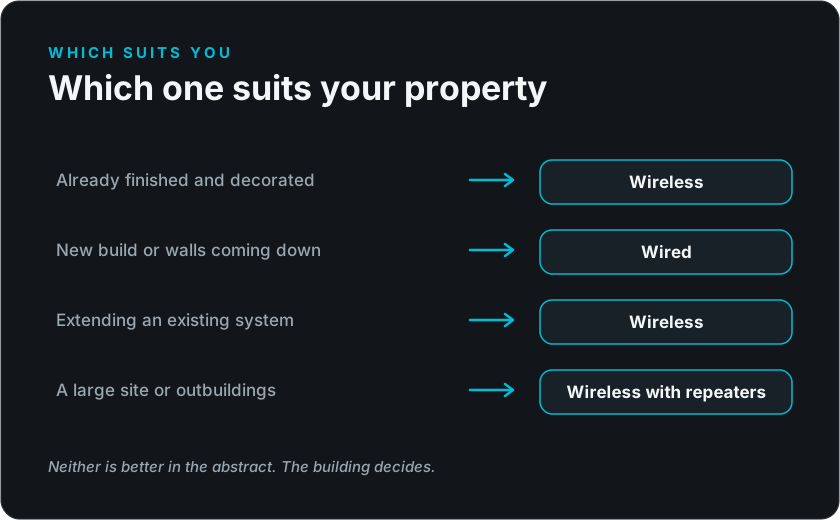
For most existing homes the answer is wireless, because it protects the property just as well with far less disruption. Wired makes sense when the walls are already open, in a new build or a full renovation, where running cable is easy and you would rather not think about sensor batteries. Large sites and outbuildings usually suit wireless with a repeater to extend the range. We fit both, and we will tell you honestly which suits your property. We are Kent County Council Trading Standards Checked, and we fit alarm systems to a survey rather than a fixed package. You can read more about the team on our about us page or find us on Facebook.
Bringing it together
The difference between wired and wireless alarm systems comes down to cables versus encrypted radio, and everything else follows from that. Wireless is quick, clean and now every bit as secure, which makes it the sensible default for a finished home. Wired avoids sensor batteries and suits a building that is open anyway. Both protect a property to the same standard, so the right choice is the one that fits how and when the work is being done.
If you are deciding between a wired and wireless alarm, we are glad to look at the property and give you an honest recommendation. You can get in touch with Bespoke AVS for advice or a free estimate across Kent, the South East and London.
Keep reading
Related guides
Security Systems
What Should You Look for in an Alarm System?
The main things to look for in an alarm system are the right security grade for your property, the option to have it monitored, proper encryption and supervision if it is wireless, tamper detection, app control, and an installer who surveys the property and stands behind the work. Get those right and the brand on the box barely matters. So the short answer is that the important choices are about grade, response and who fits it, far more than the badge or the number of sensors in the kit.
Read guideSecurity Systems
Alarm Installation Surrey
Alarm Installation Surrey is one of the most effective ways to improve security for homes and businesses across the area. Surrey includes a wide range of properties, from large detached homes and gated developments to retail units, offices, and apartment blocks. Because of this, security systems need to be designed around the property itself rather than installed using a generic approach.
Read guideSecurity Systems
What Is the Best Alarm System for a Home?
The Best Alarm System for a Home depends on the property layout, the level of security required, and how the homeowner wants to use the system day to day. In our experience, there is no single alarm system that works perfectly for every home. A detached property in rural Kent requires a different setup compared to a flat in London or a semi detached home in Maidstone.
Read guideFree estimates
Tell us about the job and we'll sort the rest
No up-selling, just simple honest advice. Domestic and commercial work across Aylesford, Maidstone, Medway, Sittingbourne, Gravesend, Canterbury, Tunbridge Wells, Sevenoaks, Dartford, Bromley.