
Wireless Intruder Alarms
By Benjamin Williams
A wireless intruder alarm is a security system where the sensors talk to the control panel by encrypted radio rather than through cables, which means it can be fitted to a finished home with very little mess and no chasing of walls. For most properties a wireless system does everything a wired one does, covering the doors, ground-floor windows and main rooms, while going in over a morning rather than a week. Whether wireless is the right choice comes down to the building and how it is used, but for the majority of homes and many businesses it is now the sensible default.
The reason wireless has become the standard is that the technology has caught up. Modern systems use encrypted, supervised signalling that closes the gaps older wireless kit had, so the old worry that wireless is somehow less secure no longer really holds. At Bespoke AVS we fit wireless intruder alarms across Kent, the South East and London, and we help people decide honestly between wireless and wired rather than defaulting to whatever is quickest to install. This guide covers how a wireless alarm works, how it compares to a wired system, whether wireless is secure, what the batteries and signal mean in practice, and how to choose the right one.
How a wireless intruder alarm works
A wireless alarm has the same parts as any other, just joined by radio instead of cable. Sensors on the doors and windows and motion detectors in the rooms send a signal to a central control panel whenever they are triggered. The panel decides what to do, whether that is sounding the siren, sending an alert to your phone, or passing the signal to a monitoring centre. The important part is that a good panel does not just listen for alarms, it listens for silence too, expecting a regular check-in from every sensor so that a flat battery or a blocked signal shows up as a fault rather than a blind spot.
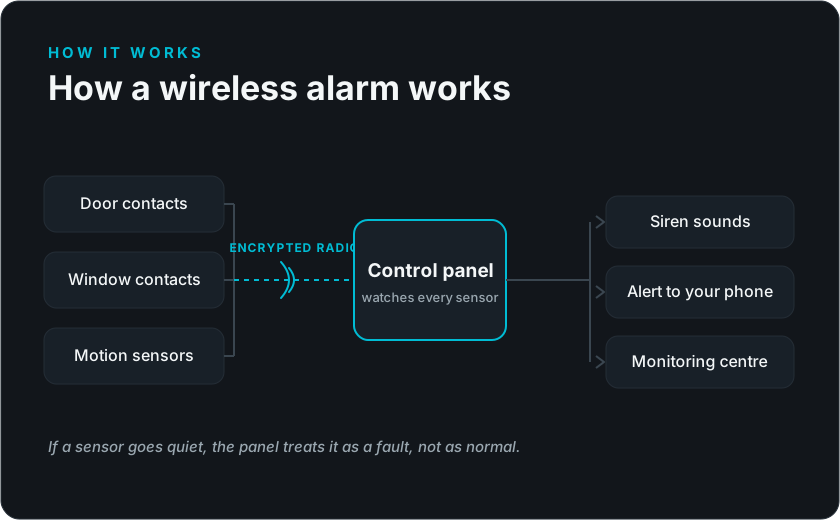
Because there is no cabling between the sensors and the panel, the whole system can be positioned where it works best rather than where the wires can reach, and extra sensors can be added later without lifting a floorboard.
Wireless or wired
The honest comparison is that neither is better in the abstract, they suit different situations. A wireless system is the natural choice for a home that is already finished, because it avoids the disruption of running cable through walls, floors and ceilings. A wired system makes more sense in a new build or a full renovation, where the walls are already open and you would rather not think about batteries again, and the full difference between wired and wireless alarm systems covers where each wins.
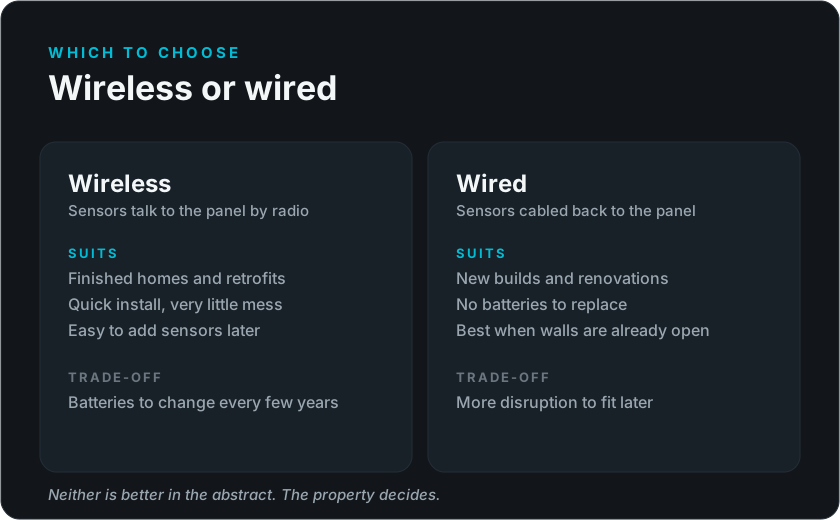
In our experience, a wireless alarm works better than a wired one for the majority of existing homes because the installation is quicker, cleaner and just as capable, and the only real trade-off, changing a sensor battery every few years, is a minor job we handle at a service visit. The exception is a property where the walls are coming down anyway, in which case wired is worth considering while the opportunity is there.
Are wireless intruder alarms secure
This is the question people ask most, usually because they have seen a video of an old system being defeated. A properly specified wireless alarm uses rolling-code encryption, so a signal cannot simply be captured and replayed, and supervision, so jamming or a dead sensor raises the alarm rather than creating a quiet gap. Those two features are what separate a serious system from a cheap kit, and they are why the blanket worry about wireless being insecure is out of date. If you want the detail on that, it is worth reading whether intruder alarms can be hacked, because the honest answer is more reassuring than the headlines.
Batteries, signal and the practical side
The two practical questions with wireless are batteries and range. Sensor batteries typically last a few years, and exactly how long alarm batteries last depends on the sensor and where it sits, but because the panel supervises them you get plenty of warning before one runs down, rather than a nasty surprise. Range is rarely an issue in a normal house, and where a property is large or has thick stone walls a repeater extends the signal without cabling. It is also worth being clear that wireless does not mean it needs your home wifi. The sensors use their own dedicated radio, and a wireless alarm keeps working whether or not the broadband is up, which is a common point of confusion worth understanding about how alarms behave without wifi.
Choosing a wireless alarm
Not all wireless systems are the same, and the difference is in the grade and the install. Alarms are built to recognised standards, and a system certified to the right grade has the encryption, supervision and tamper detection built in by design, which you can read more about on the British Standards side. For the wider picture of what actually deters a break-in, the police-backed Secured by Design scheme is a good reference. Beyond the kit, the survey matters, because the value of a wireless system is putting the right sensors in the right places, and that is where an experienced installer earns their keep. We fit intruder alarms to a proper survey rather than a fixed package, and it is worth knowing what to look for in an alarm system before you commit.
Getting the right advice in Kent
We are Kent County Council Trading Standards Checked, we fit encrypted, supervised wireless systems as standard, and we are happy to look at a property and tell you honestly whether wireless or wired suits it. You can find us on Facebook, and read more about the team on our about us page.
Bringing it together
A wireless intruder alarm is, for most homes, the sensible modern choice. It does everything a wired system does, goes in with far less disruption, and with encryption and supervision it is every bit as secure when it is specified and fitted properly. The battery and signal questions have straightforward answers, and the only time wired really earns its place is when the walls are already open. Get the survey right and a wireless system protects a property just as well as anything cabled in.
If you are weighing up a wireless alarm for your home or business, we are glad to give you an honest view on what suits the property. You can get in touch with Bespoke AVS for advice or to arrange a survey across Kent, the South East and London.
Keep reading
Related guides
Security Systems
Can Intruder Alarms Be Hacked?
Yes, an intruder alarm can in theory be hacked, but in the real world it is far rarer than the headlines suggest, and for almost every home and business it is not where the risk actually lies. A modern, professionally installed alarm uses encryption and tamper detection that make interfering with it genuine hard work, and a burglar who wants in will nearly always take the physical route through a door or window long before they think about radio signals. So the honest answer is that it is possible, it is uncommon, and it is largely avoidable with the right kit set up properly.
Read guideSecurity Systems
Intruder Alarms Bromley
Intruder Alarms Bromley services help homeowners and businesses protect their properties against theft, unauthorised access, and opportunistic crime. Bromley includes a wide mix of property types, from detached family homes and apartment developments to retail premises and offices. Because of this, alarm systems need to be designed around the property rather than installed using a standard template.
Read guideSecurity Systems
Intruder Alarms South London
Intruder Alarms South London services are in high demand as homeowners and businesses look for reliable ways to protect their properties. South London includes a wide range of areas, from busy high streets to quieter residential roads and mixed-use developments. Each type of property brings different security challenges, which means alarm systems need to be designed carefully rather than installed as standard packages.
Read guideFree estimates
Tell us about the job and we'll sort the rest
No up-selling, just simple honest advice. Domestic and commercial work across Aylesford, Maidstone, Medway, Sittingbourne, Gravesend, Canterbury, Tunbridge Wells, Sevenoaks, Dartford, Bromley.